
Building ADHD-Friendly Mornings That Actually Work
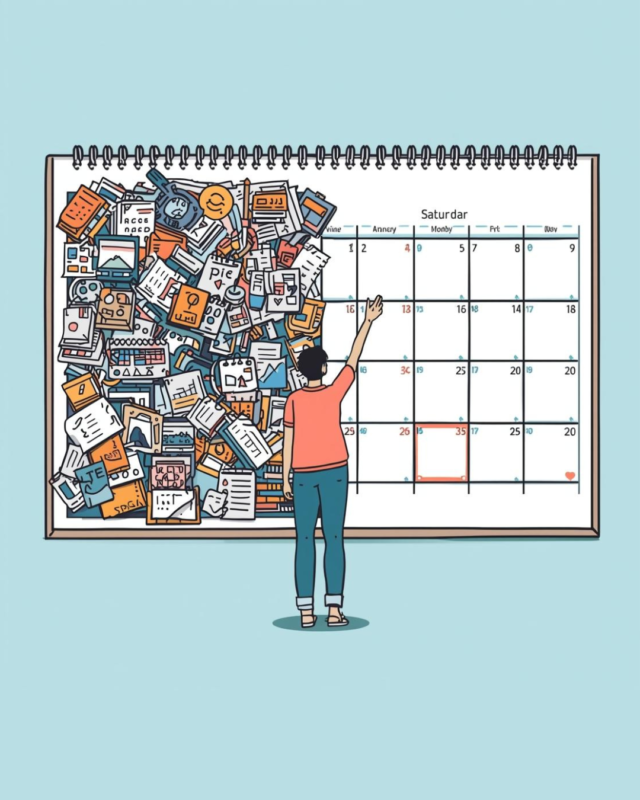
Mornings with ADHD can feel impossible. You set an alarm with good intentions, hit snooze multiple times, finally drag yourself out of bed, and then stand in your kitchen wondering what you were supposed to do next. By the time you leave the house, you are already overwhelmed, frustrated, and behind schedule.
If this sounds familiar, you are not alone. And more importantly, you are not failing at something that should be simple. ADHD brains work differently, and mornings require executive function skills that are often hardest to access first thing in the day.
The good news? You do not need a perfect morning routine. You need one that works with your brain, not against it.
Why Traditional Morning Routines Fail for ADHD Brains
Most morning routine advice assumes your brain wakes up ready to make decisions, follow multiple steps, and stay motivated without external support. ADHD brains do not work that way.
Here is what actually happens:
- Your working memory is low in the morning, making it hard to remember what to do next
- Decision fatigue hits before you have even left the bedroom
- Time blindness makes “just 5 more minutes” turn into 30
- Low dopamine means tasks that feel boring or effortful get avoided
- Emotional dysregulation can make small frustrations feel overwhelming
This is not laziness. This is neurobiology.
The RIEAAR Framework for Morning Success
Let me walk you through how to build a morning routine that actually fits your ADHD brain using the RIEAAR framework.
R — Regulate: Start With Your Nervous System
Before you try to be productive, check in with your body. If your nervous system is dysregulated, no system will work.
What regulation looks like in the morning:
- Notice how your body feels when you wake up
- Give yourself a moment to ground before jumping into tasks
- Use a simple breathing exercise or stretch to signal safety to your nervous system
- Accept that your energy and capacity will vary day to day
Try this: Before you get out of bed, take three deep breaths and notice how your body feels. Are you tense? Rushed? Still tired? This is not about fixing it. It is about awareness.
I — Intention: Know Your “Why”
Most people wake up thinking about everything they have to do. This creates overwhelm before the day even starts.
Instead, set one clear intention for your morning.
Ask yourself:
- What is the one thing I need to accomplish before I leave the house?
- Why does this matter to me today?
- What would make this morning feel successful?
Reframe the self-talk:
- Instead of: “I should be able to do this like everyone else”
- Try: “My brain works differently, and I am building a system that fits me”
When you have a clear intention, your brain has a anchor point instead of spinning through endless possibilities.
E — Externalize: Get It Out of Your Head
Your brain is not a reliable filing system, especially in the morning. Externalize everything you can.
How to externalize your morning:
- Write your morning routine as a visible checklist (on your bathroom mirror, phone, or wall)
- Set alarms with labels for each step, not just “wake up”
- Lay out clothes, keys, and bag the night before
- Keep a “morning basket” with everything you need in one place
- Use visual timers to make time tangible
Example morning checklist:
- Take medication
- Drink water
- Get dressed
- Eat something
- Brush teeth
- Grab keys, phone, wallet
Keep it simple. If you cannot remember it without looking, it needs to be externalized.
A — Accommodate: Make It Easier
Accommodation is not cheating. It is designing your environment so that the path of least resistance leads to success.
Ways to accommodate your morning:
- Reduce the number of decisions (wear the same style of clothes, eat the same breakfast)
- Decrease friction for important tasks (put your medication next to your water bottle)
- Increase friction for distractions (put your phone across the room when the alarm goes off)
- Break tasks into smaller steps (instead of “get ready,” think “put on socks, put on shirt”)
- Build in buffer time (if you think it takes 10 minutes, plan for 15)
Ask yourself: What is the smallest possible first step?
If “make breakfast” feels impossible, maybe the smallest step is “put bread in toaster.” If even that feels too hard, maybe it is “open the bread bag.”
There is no step too small.
A — Accountability: Build in Support
ADHD brains work better with external accountability and structure.
Morning accountability ideas:
- Use body doubling (get ready while on a video call with a friend, or use a virtual coworking session)
- Text someone when you are awake and when you are leaving the house
- Set up a routine with a partner or roommate where you check in at certain times
- Join an ADHD morning coworking group
Consider your tendency:
- Do you respond well to external deadlines? (Set a hard start time)
- Do you work better with someone else present? (Use body doubling)
- Do you need supportive reminders? (Ask a friend to text you)
Accountability is not about someone monitoring you. It is about creating the external structure that helps your brain follow through.
R — Reward: Celebrate Progress
Reward is not a luxury. It is how ADHD brains build motivation and momentum.
How to build reward into your morning:
- Pair an unpleasant task with something enjoyable (listen to your favorite podcast while getting dressed)
- Give yourself immediate reinforcement (check off your list, do a little victory gesture, tell yourself “I did it”)
- Notice what you accomplished, even if it is small (you got out of bed—that counts)
- Use a reward you can access right away (a favorite breakfast, 5 minutes of a show, a satisfying sensory experience)
Celebrate attempts, not just outcomes.
If your goal was to leave by 8:00 and you left at 8:15, you still succeeded at getting out the door. Progress is not perfection.
Putting It All Together: A Sample Morning
Here is what an ADHD-friendly morning might look like in practice:
7:00 AM — Alarm goes off
- Phone is across the room (accommodation)
- First alarm says “Take 3 breaths” (regulate)
7:05 AM — Out of bed
- Check morning checklist on bathroom mirror (externalize)
- Intention: “I am getting to work on time today because I have an important meeting” (intention)
7:10 AM — Getting dressed
- Clothes already laid out (accommodation)
- Listen to favorite playlist (reward)
7:20 AM — Breakfast
- Eat pre-portioned overnight oats from fridge (accommodation)
- Text accountability partner “I am up and eating” (accountability)
7:35 AM — Final check
- Walk through checklist one more time (externalize)
- Grab pre-packed bag (accommodation)
- Give yourself credit for getting ready (reward)
7:45 AM — Out the door
This is not perfect. But it works.
When Your Routine Stops Working
ADHD routines will break down. This is normal.
When your morning routine stops working, resist the urge to blame yourself. Instead, get curious:
- Has something in my life changed? (stress, sleep, schedule)
- Is this routine too complicated?
- Am I trying to force a system that does not fit my current needs?
- Do I need to redesign something to make it easier?
Remember: A reset is not a failure. It is part of living with an ADHD brain.
Final Thought
You do not need a color-coded planner, a 5 AM wake-up time, or an elaborate self-care ritual to have a successful morning.
You need a system that:
- Fits your brain
- Reduces decision-making
- Builds in support
- Celebrates small wins
Start with one element of the RIEAAR framework. Pick the one that feels most needed right now. Build from there.
Your morning does not have to look like anyone else’s. It just has to work for you.
Ready to Build Systems That Fit Your Life?
If you are tired of forcing yourself into routines that were not designed for ADHD brains, I can help. I work one-on-one with clients to create sustainable systems using the RIEAAR framework—systems that honor how your brain works, not how you think it should work.
Let’s build a morning routine that actually sticks. Book a consultation today!